NOTE 1: I started writing this last week as soon as it was announced that CBS fired Charlie Sheen from the hit sitcom Two and A Half Man. It should have been obvious to everyone that the Charlie Sheen media blitz was coming to an end. When vocalizations of insanity get co-opted as catchphrases for t-shirts and bumper stickers, it loses its appeal. Sure, we had a fun week or two, but how long can it last after the initial shock? People were getting tired and, worst of all, bored with the situation. Even Charlie seems to have come down from his manic frenzy but still has to maintain the character long after the novelty has worn off and he wants to move onto different projects. He has become typecast in his own life. Then the Japanese earthquake/tsunami/earthquake happened and Charlie Sheen has moved off the front page completely. So obviously, I'm a bit behind the curve when it comes to throwing in my two cents to the situation.
NOTE 2: I've never seen Two and a Half Men so, like everyone writing about a topic they know nothing about, I relied on Wikipedia. (Fun Fact: Half Man is Jon Cryer's character's son.)
NOTE 3: Just bear with me. Or don't read.
With last week's announcement that CBS fired Charlie Sheen from Two and a Half Men, everyone (well, a lot of people) was (were) left wondering, “What’s going to happen with the show?” Well, Charlie Sheen himself practically wrote the show's next season.
As the show's ninth year begins, Charlie (a genuine warlock) is missing. Following the loss of their patriarch, Jon Cryer and The Kid must don their cloaks and go on a grave adventure of endless forests and enchanted castles to find their hero. As Charlie is a warlock, so is his brother, Jon Cryer. The Kid serves as an apprentice.
As they progress along their peril-filled journey, we (and Jon Cryer and The Kid) learn about Charlie's kidnapping. While practicing magicks, Charlie peered through the looking glass and saw the world as it truly is. Evil Trolls (Racist Jewish caricatures like Billy Crystal in The Princess Bride) control the money; the Brothers Warner control the people through mead and traveling propaganda troupes; and the Catholic Church controls the government. When Charlie attempted to warn the people of the shire, the Warriors of the Joint Venture captured him.
See, Charlie is no ordinary warlock. His tiger blood and Adonis DNA exist in the perfect proportion to make him the most powerful warlock of the land. If the bad guys can harness his essence, it will grant them one thousand years of total control. Furthermore, each evil party has their own plans for Charlie. His ability to turn tin cans into gold (similar to Rumpelstiltskin) can drastically affect the economy, and Trolls love gold. The Catholic Church wants to torture Charlie because his work as a Vatican assassin cost them hundreds of their top spies. And the Brothers Warner want to brainwash Charlie, bring him back into the fold, and use him to further manipulate the townspeople who eat their slop like pigs at a trough.
Jon Cryer and The Kid collect most of this information from Knights of the Realm, who are on their own quest to destroy this tyranny, during a 5-6 episode storyline early in the season.Ring Wraith-ian creatures obliterate the Knights during November sweeps.
Meanwhile, also in the story, Jon Cryer and The Kid learn about their wizardry powers as the audience learns about the strange new world they inhabit. For example, when Troll King Chaim tries to infest the two with his poisons (similar to the poppies scene in The Wizard of Oz), all they need is their minds to break free of the addiction. No matter how many drugs they ingest, they don't just survive but throw parties of legend, told for generations through myth and song. They encounter Goddesses like April Bowlby, Holland Taylor, Courtney Thorne-Smith, and Melanie Lynskey in bodices. I guess throw in a Sword of Winning needed to defeat some dragon or cross a bridge or something.
The series ends with the gang finding a captive Charlie about to die, still unwilling to submit to his captors even at the expense of his own life. A battle ensues. A Troll fatally wounds Jon Cryer. A ward of the Brothers Warner is about to slice the throat of The Kid. And Charlie, with his last breath, expels his life force into the villains.
Troll children and sons of the Brothers Warner weep over their parents' exploded bodies. The Kid, the lone survivor on the side of good, finally accepts his destiny and understands that they're like animals. And he slaughters them. Like animals. He hates them. No longer an apprentice, he rides into the horizon, ready to bring peace to the land.
Failing that, there's always Apocalypse Now. We know real Charlie has a penchant for the movie and that fake Charlie is a jingle writer. Fake Charlie knows the truth about advertising, manipulation, and brainwashing the gullible public into buying garbage. He has seen the inner workings of industry, the patheticness of man, the emptiness of souls dying to be filled with cutesy slogans and emasculating beer commercials. Fed up with this bullshit, he hides out in Canadian wilderness sending out tweets and u-streams exposing our depraved society. Charlie's employers contact Jon Cryer and request that he terminate his brother's contract, with extreme prejudice. As Jon Cryer travels up the Pacific Coast, he begins to identify with Charlie, understand his message, and view the world as hopeless and broken. When he arrives at the Charlie's compound consisting of Midwesterners that made a pilgrimage to their leader's camp, as well as a half-mad photographer from Entertainment Weekly, he's torn but knows his duty.
When X-Men was first released in 1999, it ushered in a new age of superhero movies. A Golden Age so it were. (Unless those racist serials in the 1940s were the Golden Age, the era from Superman: The Movie (1978) to Batman & Robin (1997) was the Silver Age, and this is the Bronze Age. Some might argue that Blade (1998) really started it all, but at most, the R-rated vampire action movie was a test run for more established, mass friendly, superheroes.)
Whatever the case, the success of that film changed the entire film industry for the next decade and into the current one. Every year we must contend with a summer landscape peppered by everyone from Spider-Man to Scott Pilgrim. In 2011 alone, we met The Green Hornet in January, and over the next several months we will encounter Thor (May 6), Priest (May 13), X-Men: First Class (June 3), Green Lantern (June 17), and Captain America: The First Avenger (July 22- though it should be released for the July 4 weekend- stupid Transformers: Dark Of The Moon).
In hindsight many people look back at X-Men with disdain due to its anticlimactic finale, small scale, focus on Wolverine, and “Do you know what happens to a toad when it's struck by lightning? The same thing that happens to everything else."But its impact remains notable, it was good for the time, and still places in the top two X-Men movies. X2 in 2003 corrected many of the problems from the first film by drastically expanding its scope. And the conclusion featuring the Phoenix logo led to countless geek squeals and palatable anticipation for the next entry in the series.
Then director Bryan Singer left the franchise (for the blunder Superman Returns),and X-Men: The Last Stand ruined everything. Directed by the passionless Brett Ratner, X-Men: The Last Stand killed most of the best characters, turned Dark Phoenix (one of the greatest comic storylines in history) essentially into Bane from Batman and Robin, and made Rogue into a coward willing to abandon everything that made her unique.
When the remaining X-Men took their last stand, it was with two main characters (Storm (poorly played by Halle Berry) and Wolverine (the face)), two essentially cameo characters (Colossus and Iceman), and Kitty Pryde (arguably a newcomer having been played by different actors in all three films). In this final battle against hundreds of evil mutants, the very least we should have gotten was for Rogue to get over her angst, absorb the powers of several mutants, and rise to the air as the Ms. Marvel-powered Rogue from the comics. But we didn't. Of course, when the vast majority of the bad guys' powers seem to be jumping awkwardly, we probably wouldn't have gotten that joy anyway.
Although X-Men: The Last Stand made the most money out of all the X-movies, it essentially killed the franchise- at least as far as sequels go. Guess that's what happened when you shuffle Professor X, Cyclops, and Jean Grey off this mortal coil.
Nevertheless, FOX squeezed more life out of the series. 2009 saw the release of the nonsensical and disappointing prequel X-Men Origins: Wolverine. Hugh Jackman will pick up the claws again for 2012's non-sequel, non-spinoff, stand-alone movie Wolverine directed by Darren Aronofsky, one of the few directors whose involvement obliterates prior misgivings. The studio also planned to develop other prequels- one with Magneto and one with Professor X- but those were abandoned in favor of X-Men: First Class, a set-in-the-1960s origin story of the X-Men.
The announcement of X-Men: First Class was met with understandable doubt. The franchise had already been squandered. Trying to match up a prequel with its earlier sequels is a difficult fete at best, just ask Wolverine. Or George Lucas. At least a flat-out reboot would give a new director the chance to get it right again without destroying the potential of the Dark Phoenix saga. The selection of Matthew Vaughn (Kick-Ass) as director and writer was interesting. The cast (consisting of Jennifer Lawrence, Rose Byrne, Kevin Bacon, and topped off with James McAvoy and Michael Fassbender as Professor X and Magneto, respectively) was surprisingly good. But even combined, this was not enough to overcome the ill will that many had towards the concept.
FOX released the X-Men: First Class trailer on February 10, 2011. For the most part, fans reacted positively. The film had a color and style unlike the previous four films. The X-Men wore actual costumes and not padded leather suits. The movie, against all odds, looked as though it might actually be good.
So wherein lies the problem? It comes from how FOX refuses to let the movie stand on its own. From the start of the trailer to the posters, everything has to do with whom Erik and Charles will become, rather than who they are. We need not, we should not be reminded us of the franchise that once existed, but rather imagine the series that this can become. We needn't shots of Professor X's wheelchair or Magneto's cape to convince us to see it; the name X-Men and the footage from the movie should be enough.
These two are the worst posters for any movie in the history of film.
Where the Star Wars prequels failed (well, one of the thousands of places where the Star Wars prequels failed) was their inability to do much other than prey on our nostalgia. Somewhat similarly, Marvel blundered with Iron Man 2 by linking it too closely with its future project, The Avengers. This tact sapped a lot of the interest in Tony Stark's journey and has already made people wary of Thor and Captain America: The First Avenger, fearing that those movies will also end up as commercials for the next film. And who can blame them? Captain America punched Hitler in 1941 and with that subtitle he comes across as an afterthought.
From the little we've seen of X-Men: First Class, the film itself does not seem like it follows either of those two paths. It has a vibe and personality of its very own. And the marketing people should respect, and work with, that.
X-Men: First Class will hit theaters on June 3, 2011.
One of the most popular and controversial novels of all time, Atlas Shrugged, is heading to theaters as a trilogy after decades of aborted attempts to film it. Heralded as a Bible by some and “a load of crap” by others, the 55-year-old tome brings a lot of baggage with it to the screen. However one cannot discuss the movie, and therefore the trailer, without briefly taking a detour into Objectivism, defined by author Ayn Rand as “the concept of man as a heroic being, with his own happiness as the moral purpose of his life, with productive achievement as his noblest activity, and reason as his only absolute.”
I started writing this piece with an essay about Objectivism and my thoughts on the subject. It was a ~1000 word rambling, incoherent mess, and I later abandoned it for obvious reasons. I am not a scholar in Objectivism, but I have read Anthem, The Fountainhead, and Atlas Shrugged. Thus, like pretty much every other blogger, I’m going into a hot-button and divisive issue with half information and mistruths.
Personally, I find Objectivism to be an interesting philosophy that could conceivably work on an individual basis (as with Howard Roark in Rand's superior novel The Fountainhead) but not feasible on a grand scale as in Atlas Shrugged. I believe that Objectivism suffers from the same naïve idealism in humans as drastically opposite belief systems like communism and socialism. I will go more in depth into this, as well as the movie's troubled history, in the TRAILER REPORT itself.
At the start, we see that the movie is rated PG-13. While the novel itself might not be considered particularly vulgar (except by people who might take offense to its content), it's full of rich themes and adult situations that ought to warrant an R rating. However, as last year showed, plenty of filmmakers can create complex and impressive PG-13 movies (e.g. True Grit, The Social Network), so while the rating isn't immediately a bad sign, it's definitely worth noting. Of course, considering how antagonistic the novel is to the liberal media, if this movie was faithful to the book you'd expect the Hollywood elite to rate the film ‘R’ sight unseen to prevent impressionable adolescents from being corrupted by Rand's dangerous teachings.
One of the first things anyone should know about this film is that it was allegedly made with a $5 million budget. Although that's the price tag for only the first part of the trilogy, the movie has no choice but to look incredibly cheap. While plenty of movies can be made for less, making this one on the cheap does a disservice to the epic that is Atlas Shrugged. To be entirely fair, however, the movie does not look like the mammoth clusterfuck I imagined after first hearing about its pedigree.
It's unfortunate though because the scope and style of the novel would work best as an alternative history period piece. You know, in a time when trains weren't derided and mocked. Nevertheless, even with the novel updated to today's period, there's a weight that only money and/or a real skilled director can provide. This film probably does not have that director.
The director for this part, and presumably the two others, is Paul Johansson. His previous directing credits include 18 episodes of One Tree Hill, a TV movie, and a short. Additionally, Johansson plays Rand's ubermensch John Galt, showcasing a level of hubris matched only by Vincent Gallo and M. Night Shyamalan. His previous roles include nearly 150 episodes of One Tree Hill.
The opening moment in the trailer implies what could/should have been. The mysterious man talking to Midas Mulligan makes you wonder how the film (at least the Galt segments) would look as a respectable/“actual” 1950s film noir/neo-noir, with a gritty, imposing New York as the backdrop. Instead, we're greeted with the immediate visage of a film that seems to be playing noir at a community theater level. The storefronts and signs look cheap and generic. The dialogue (“Someone who knows what it's like to work for himself and not let others feed off the profits of his energies”), while getting the point across, seems too wordy. Maybe it’s because the speaker sounds winded about halfway through his delivery. The trailer then presumably cuts to the scene in the novel where children are killed in a train crash because their parents contributed to charity.
With that out of the way, the characters.
Dagney Taggart- I don't know a lot about Taylor Schilling (she starred in Mercy, that short-lived NBC series about a rogue nurse who doesn't play by the rules damn it!), but from the trailer she is no Dagney Taggart. Dagney, arguably the main character in Atlas Shrugged, should emit a gravitas, a sense of importance. She is someone whose mere presence should make one uncomfortable- not in a bad way, but because you immediately sense that she exists on a different level intellectually. With Schilling-Dags, I alternately get the sense of a Lifetime Movie heroine and The Closer. Also, she'd never say “if you double cross me, I'd destroy you.” She's not that forward; she doesn't need to be.
Hank Rearden- Hank Rearden is played by Grant Bowler, another television veteran whose most notable roles came on True Blood and Ugly Betty. Of the main characters thus far, Rearden seems one of the better cast. While I'd personally envision Rearden as someone more … masculine (?) and commanding, Bowler seems at least somewhat passable. Although occasionally he seems similar to the ilk of Business Man Extra seen on commercials. Also, he seems to spend a lot of time at lavish dinners.
The Government- Studio Head Jack Lipnick and his lackey Lou Breeze are reunited to represent the government, along with some other people like the Principal from Buffy. Their names, their personalities, any internal complexities are irrelevant. In the world of Atlas Shrugged, the important thing to remember is that the Government is bad, socialist, and against innovation presumably due to jealousy.
Some might find this distasteful but it this a bad thing? Not at all. We have plenty of movies showing corporations as one dimensionally soulless and evil. Hell, the quest for Unobtainium was symbolized by a guy who very well should have had dollar signs CGI'ed in place of pupils and that movie was the highest grosser of all time.
Why shouldn't The Government with its history of incompetence and bumbling be seen as the villain with the free marketeers as the hero? Is the quest for profit really that much more antagonistic to our sense of being than the quest for power or a small group of quasi-elected officials sapping the intellectual energy of its people? This isn't to say that business leaders and entrepreneurs are somehow infallible. They aren't, and one of my biggest problems with Atlas Shrugged is Rand's assumption that the best and brightest will actually be the best and brightest (e.g. best working conditions, best wages, always seemingly agreeing on everything). But that doesn't mean that they are naturally villainous either. I'd go even further and say that a movie with an Objectivism backing could be very important and interesting in an era of bailouts and TARP funds and cries of socialism against so many politicians and fascism against every single person in elected office. But will this be the movie? Can it?
This article cannot end without asking the question pondered since the book first came out: could an Atlas Shrugged movie even work? The book itself is a dense, 1100+ page novel endlessly rambling about a philosophy with characters that could best be described as “thinly drawn.” People such as Charlize Theron, Angelina Jolie, and even Albert S. Ruddy (producer of The Godfather, Million Dollar Baby, and Cannonball Run II) have been involved at one point or another in failed productions of the work. Fans have said that it needed to be some sort of multi-part HBO miniseries to allow for all the depths and complexities required. (And considering the history in and the visuals of Boardwalk Empire alone, this probably would have been the best method). The movie itself plans to be three parts, though it's hard to imagine a successful trilogy with the look of the Atlas Shrugged Part 1.
While admittedly not the best strategy, if Atlas Shrugged were to enter cinema, I actually believe that a single movie can work, provided it had an appropriate (3-ish hour) running time. Obviously, a lot of characters would need to be cut out (similar to how The Fountainhead movie basically ignored the existence of Peter Keating), but the novel was never about the characters anyway. Yet, ironically, characters would be the best way for the movie to succeed. In other words, the key to making Atlas Shrugged workas a film would be to espouse the philosophy of the book through complex characters and subtlety in place of pontification and a 2 hour radio address by John Galt. The Government could remain overtly evil and engage in its widespread stealing of man's ideas and inventions without the audience being beaten over the head about how bad it is or that they are doing it. The exchange in the trailer between Glasses Guy and Rearden (“Glasses Guy: “They say you're intractable, you're ruthless, your only goal is to make money.” Rearden: “But my only goal is to make money.” GG: “Yeah but you shouldn't say it.”) works better and feels more natural than the line at the beginning. A film featuring moments like that could easily get the point across while avoiding the worst excesses of the novel.
Or, a movie focusing almost exclusively on Galt's adventures at Twentieth Century Motor Company could reallyget to the core of the work in a condensed running time. That cautionary tale/parable can explain so much about Objectivism, the dangers of collectivism, and the importance of the individual while being simultaneously powerful and horrifying.
The start of this decade offered several movies that gladly and blatantly connected themselves to the 1980s. From Scott Pilgrim vs. The World's references to 8-bit video games to those weeks when the nation was once against obsessed with Back To The Future, the Me Decade was big in the cinematic world. Yet of those films that lived on their associations 30 years prior, only Tron: Legacy managed to pull it off. Even Hot Tub Time Machine couldn't swing it and that featured John Cusack at a ski resort in the 1980s.
Tron: Legacy
I'm not saying Tron Legacy was a great movie. It wasn't.Definitely visually impressive, it unfortunately lacked that extra bit of uniqueness that made the original film so memorable.
For example, whereas the original 1982 Tron was a prison break movie done in a science fiction-y landscape, Tron Legacy was a typical science fiction-y film done in a science fiction-y landscape, following most of the tropes of the genre. And, while the original film seemed to connect everything in The Grid to real life computers/computer programming in an understandable, though not wholly realistic, way (i.e. the programs take the form of the creators), Tron Legacy seemed to abandon that premise, opting instead for occasional spurts of nonsensical technobabble and proclamations of “the one.”
Nevertheless, although missing the cleverness of the original film in both concept and execution, what Tron:Legacy did right- and where many of the subsequent movies failed- was respect the source material.
Tron:Legacy did not look upon the original Tron with derision. Kevin Flynn's son didn't mock the Frisbee discs. The original light cycle was treated like a classic car. The movie itself upgraded and expanded upon the effects/look/aspects of The Grid without taking anything away from the original film or the original landscape.While this did not cover up all the film's flaws, it made the movie as a whole more palatable and enjoyable.
Unfortunately, there was no Yahtzee or Moses.
Clash of the Titans
Compare to something like the uninspired Clash of the Titans remake. While the 1981 film isn't as respected or admired as Tron (although Tron itself did not gain respect until relatively recently, as viewers of the 3-D Homer segment of The Simpsons' Treehouse of Horror VI might recall), its one blatant reference to the first film drew an immediate line in the sand. (A scene early on features Perseus finding the first COTT'sBubo the Owl in a chest and essentially being told that it's fucking stupid and lame.)
By the way, speaking of “respecting the source material,” Greek mythology features some of the richest stories the world has ever known. Nearly everything drama has tried to accomplish over the past several thousand years was already contemplated by the gods, the demi-gods, and the humans of Greek mythology. 2010 Clash opted to boil down one of the greatest universes the world has ever known to one-dimensional caricatures of Hades and Zeus. To base a movie around their sibling rivalry without even referencing Poseidon is shameful. An excellent CHUD article better discusses the film's problems.
Wall Street: Money Never Sleeps
To read my more in-depth review of Wall Street 2, click here.
Just as Tron: Legacy was a sequel to a 1980s film, so was Wall Street: Money Never Sleeps. Despite having many of the same behind-the-scenes people involved from the 1987 movie, including returning director Oliver Stone, Wall Street: Money Never Sleeps failed where Tron: Legacy succeeded.
The film virtually starts with a shot of Gekko's 1980s cell phone as he's being released from prison. While Gekko's old cell phone has become a stock joke over the past couple of years due to its obsolescence, and the scene got good laughs in the trailer, the moment does not fit the tone of Wall Street or its sequel. It's a goofy moment and kind of a hacky gag. Unrealistic that Gekko would bring his cell phone to the prison, the bit is basically the same “Bubo is fucking stupid” joke from Clash of the Titans without the excuse of being Clash of the Titans.
As the movie progresses, things get worse. When Gekko regains his 1980s persona halfway through the film, it feels forced. Michael Douglas' Academy Award-winning role becomes a caricature based on vague, shorthand ideas about the character, rather than who the character actually was or what he would turn into. Over the past several decades, apparently, Charlie Sheen's Bud Fox turned a boozing pussy hound. Obviously meant as an homage to the private life of Charlie Sheen, this brief scene was not believable as a next step in the evolution of Bud Fox considering how his redemption was the core of the entire first film. This serves as yet another example of Wall Street 2 playing to the simplest members of the audience, instead of contributing to the story, the characters, or the source material.
Although Tron Legacy was supposed to be the bigger and more mass-friendly film, Wall Street 2 came across as caring more about (no pun intended) trading in on the first film's name than continuing the tale. Morals are muddled (even the “greed is not just good but legal” line used repeatedly in the advertisements is only loosely touched upon), character motivations make no sense, and points (if there are any) are never actually made. The more one thinks about the film, the worse it is. It's 2010's Superman Returns.
Though not actually sequels or remakes, both The Expendables and Cop Out promised to return to styles of filmmaking long gone in our world of postmodern, self-referential douchery. Neither delivered.
The Expendables
When first announced, audiences had a lot of hope for The Expendables. Sylvester Stallone promised a return to the action movies of the 1980s where actors like Bruce Willis, Stallone, and Arnold Schwarzenegger ruled the box office. Moreover, he swore to do it again with the biggest action stars of that era.
Unfortunately, The Expendables could not pull it off.
For starters, many of the cast were “modern” guys who don't have the connection that old school action heroes do. That's not to say that Randy Couture, Steve Austin, or Terry Crews couldn't make up the next generation of action stars, but they currently lack the iconic status needed for a film like this. The only “modern” performer that fit into this movie was Jason Statham, whose vehicles manage to harken back to that earlier generation while maintaining a modern feel. His movies might not have the staying power of the likes of Cobra or Marked for Death, but in a world where pure action movies are rare, Statham continues the legacy.
The next and biggest problem was the tone. Neither entirely serious nor entirely jokey, 1980s action films existed in a time before movies had to be self-aware and could just be. Sure they were cheesy, but being blind to the cheese made those movies work, made those movies fun. The “badassery” of Tango and Cash or Commando was tempered by their over-the-top dorkiness but they believed in themselves so the audience believed in them. Although now heavily ridiculed, the ability to give a lame one-liner with a straight face right before slaughtering someone is an unappreciated skill.
While The Expendables featured some of the right actors, the one-dimensional villains, the evil corporate guy, and violence, it lacked the soul necessary to be a genuine 1980s action film. It tried too hard to be cool.
Oddly enough, Stallone managed to find the right balance in Rambo and Rocky Balboa.
Cop Out
Before Cop Out was released, director Kevin Smith said that it was his homage to 1980s action-comedies like Beverly Hills Cop, Lethal Weapon, and 48 Hours. He condemned critics for not getting it when the horrific reviews came out. Then he said his goal was to make a film he would like to see with his dad. And then he retreated to Twitter.
I want to like Kevin Smith again. I really do. I even found Zack and Miri Make a Porno enjoyable. But Cop Out was a step backwards for the filmmaker and really showcased his lack of progress as a director. And, more importantly, as a 1980s homage, Cop Out seemed to lack any understanding of the genre.
The buddy cop comedy has a style; a look and a feel that makes them different than the typical action-comedy. The pacing and the style of such films can be imitable, similar to what Todd Phillips managed to accomplish with the Starsky & Hutch movie and the 1970s television cop genre. Kevin Smith did not even seem to try beyond combining a Wild Black Cop with a Serious White Cop.
Among the film's many problems is that most of the genre takes place in California; I don't think any of them were set in Philadelphia, as Cop Out was. It would be like doing a takeoff of the gritty New York Serpico/French Connection crime dramas of the 1970s and setting the movie in St. Louis.
Secondly, in all of those films the two partners pretty much meet for the first time as the movie begins. We see how the uptight cop initially deals with the rogue behavior of Mel Gibson and Eddie Murphy, how they eventually grow together, and how their disparate crime fighting styles mesh. We learn at the start of Cop Out that Bruce Willis and Tracy Morgan have been partners for a decade. Had the film been about what happens to an Eddie Murphy/Judge Reinhold-style team ten years down the line, that would be one thing, but Cop Out wasn't about that at all.
Thirdly, in the classic films, despite the crazy cop having unconventional methods, he was still a good cop, just an outside-the-box thinker. In that role, Tracy Morgan comes across as a blithering idiot that you're shocked hadn't shot his face off years ago. He is in the mold of Martin Lawrence in Blue Streak and Martin Lawrence in National Security.
Fourthly, the uptight cop might be straitlaced but, again, still a good cop who is passionate about his work, just a bit too conventional in his methods. He is not, and god help me for saying this, dead the whole movie.
Fifth, as a pair, the partners in buddy cop films do not seem incompetent. Overzealous, but not incompetent. Whether apart or together, Willis and Morgan seem retarded at doing their jobs and neither of them seemed to give a damn about the case. It probably did not help that their chemistry was so bad that the film and their relationship would have been better served had one of them been CGI'ed in later.
Sixth, even when the desk sergeant took Willis/Morgan off the case, he seemed more bored than angry. Again, if this was a guy who was just exhausted about having to suspend these two from the force year after year that would be one thing, but it wasn't.
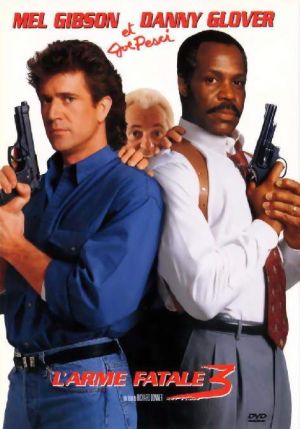
Cop Out was a certain type of movie, but not the homage to the Buddy Cop Comedy genre it purported to be. Instead, it was Generic Action Comedy With A Black Guy. It was Lethal Weapon 3 (complete with annoying lackey Sean William Scott in place of Joe Pesci's Leo Getz), not Lethal Weapon. It was Showtime with Eddie Murphy and Robert DeNiro. It was I, Spy with Eddie Murphy and Owen Wilson. It was not Hot Fuzz or Kiss Kiss Bang Bang, both recent films that showed a real appreciation for and understanding of the genre.
To be fair, there were elements in Cop Out that made it appear as though some people got it. The synthesizer-heavy score by Beverly Hills Cop'sHarold Faltermeyerclearly meant to evoke memories of the era. Surprisingly, the “other” cop team of Adam Brody and Kevin Pollack fit the mold. Brody's a rookie, Pollack's a veteran. They have a weird connection over a small thing (in this case boots). They perform actual police work. They seem competent as a team, yet different enough in personalities to play off each other, and they grow to appreciate each other' value throughout the film.
Conclusion
It requires more than merely saying that one respects source material to actually prove that one respects source material. Films, series, books, and genres are more than just individual elements one can pillage from and call it a day. For sequels, it's more than just throwing in an old line here or there that the audience remembers from the first film. Homages require a greater effort than merely replicating the most basic of basics. Tron Legacy seemed to understand this; the other movies did not.