The start of this decade offered several movies that gladly and blatantly connected themselves to the 1980s. From Scott Pilgrim vs. The World's references to 8-bit video games to those weeks when the nation was once against obsessed with Back To The Future, the Me Decade was big in the cinematic world. Yet of those films that lived on their associations 30 years prior, only Tron: Legacy managed to pull it off. Even Hot Tub Time Machine couldn't swing it and that featured John Cusack at a ski resort in the 1980s.
Tron: Legacy

I'm not saying Tron Legacy was a great movie. It wasn't. Definitely visually impressive, it unfortunately lacked that extra bit of uniqueness that made the original film so memorable.
For example, whereas the original 1982 Tron was a prison break movie done in a science fiction-y landscape, Tron Legacy was a typical science fiction-y film done in a science fiction-y landscape, following most of the tropes of the genre. And, while the original film seemed to connect everything in The Grid to real life computers/computer programming in an understandable, though not wholly realistic, way (i.e. the programs take the form of the creators), Tron Legacy seemed to abandon that premise, opting instead for occasional spurts of nonsensical technobabble and proclamations of “the one.”
Nevertheless, although missing the cleverness of the original film in both concept and execution, what Tron: Legacy did right- and where many of the subsequent movies failed- was respect the source material.
Tron: Legacy did not look upon the original Tron with derision. Kevin Flynn's son didn't mock the Frisbee discs. The original light cycle was treated like a classic car. The movie itself upgraded and expanded upon the effects/look/aspects of The Grid without taking anything away from the original film or the original landscape. While this did not cover up all the film's flaws, it made the movie as a whole more palatable and enjoyable.
Unfortunately, there was no Yahtzee or Moses.

Clash of the Titans

Compare to something like the uninspired Clash of the Titans remake. While the 1981 film isn't as respected or admired as Tron (although Tron itself did not gain respect until relatively recently, as viewers of the 3-D Homer segment of The Simpsons' Treehouse of Horror VI might recall), its one blatant reference to the first film drew an immediate line in the sand. (A scene early on features Perseus finding the first COTT's Bubo the Owl in a chest and essentially being told that it's fucking stupid and lame.)

By the way, speaking of “respecting the source material,” Greek mythology features some of the richest stories the world has ever known. Nearly everything drama has tried to accomplish over the past several thousand years was already contemplated by the gods, the demi-gods, and the humans of Greek mythology. 2010 Clash opted to boil down one of the greatest universes the world has ever known to one-dimensional caricatures of Hades and Zeus. To base a movie around their sibling rivalry without even referencing Poseidon is shameful. An excellent CHUD article better discusses the film's problems.
Wall Street: Money Never Sleeps

To read my more in-depth review of Wall Street 2, click here.
Just as Tron: Legacy was a sequel to a 1980s film, so was Wall Street: Money Never Sleeps. Despite having many of the same behind-the-scenes people involved from the 1987 movie, including returning director Oliver Stone, Wall Street: Money Never Sleeps failed where Tron: Legacy succeeded.

The film virtually starts with a shot of Gekko's 1980s cell phone as he's being released from prison. While Gekko's old cell phone has become a stock joke over the past couple of years due to its obsolescence, and the scene got good laughs in the trailer, the moment does not fit the tone of Wall Street or its sequel. It's a goofy moment and kind of a hacky gag. Unrealistic that Gekko would bring his cell phone to the prison, the bit is basically the same “Bubo is fucking stupid” joke from Clash of the Titans without the excuse of being Clash of the Titans.
As the movie progresses, things get worse. When Gekko regains his 1980s persona halfway through the film, it feels forced. Michael Douglas' Academy Award-winning role becomes a caricature based on vague, shorthand ideas about the character, rather than who the character actually was or what he would turn into. Over the past several decades, apparently, Charlie Sheen's Bud Fox turned a boozing pussy hound. Obviously meant as an homage to the private life of Charlie Sheen, this brief scene was not believable as a next step in the evolution of Bud Fox considering how his redemption was the core of the entire first film. This serves as yet another example of Wall Street 2 playing to the simplest members of the audience, instead of contributing to the story, the characters, or the source material.
Although Tron Legacy was supposed to be the bigger and more mass-friendly film, Wall Street 2 came across as caring more about (no pun intended) trading in on the first film's name than continuing the tale. Morals are muddled (even the “greed is not just good but legal” line used repeatedly in the advertisements is only loosely touched upon), character motivations make no sense, and points (if there are any) are never actually made. The more one thinks about the film, the worse it is. It's 2010's Superman Returns.

Though not actually sequels or remakes, both The Expendables and Cop Out promised to return to styles of filmmaking long gone in our world of postmodern, self-referential douchery. Neither delivered.
The Expendables
When first announced, audiences had a lot of hope for The Expendables. Sylvester Stallone promised a return to the action movies of the 1980s where actors like Bruce Willis, Stallone, and Arnold Schwarzenegger ruled the box office. Moreover, he swore to do it again with the biggest action stars of that era.
Unfortunately, The Expendables could not pull it off.
For starters, many of the cast were “modern” guys who don't have the connection that old school action heroes do. That's not to say that Randy Couture, Steve Austin, or Terry Crews couldn't make up the next generation of action stars, but they currently lack the iconic status needed for a film like this. The only “modern” performer that fit into this movie was Jason Statham, whose vehicles manage to harken back to that earlier generation while maintaining a modern feel. His movies might not have the staying power of the likes of Cobra or Marked for Death, but in a world where pure action movies are rare, Statham continues the legacy.
The next and biggest problem was the tone. Neither entirely serious nor entirely jokey, 1980s action films existed in a time before movies had to be self-aware and could just be. Sure they were cheesy, but being blind to the cheese made those movies work, made those movies fun. The “badassery” of Tango and Cash or Commando was tempered by their over-the-top dorkiness but they believed in themselves so the audience believed in them. Although now heavily ridiculed, the ability to give a lame one-liner with a straight face right before slaughtering someone is an unappreciated skill.
While The Expendables featured some of the right actors, the one-dimensional villains, the evil corporate guy, and violence, it lacked the soul necessary to be a genuine 1980s action film. It tried too hard to be cool.
Oddly enough, Stallone managed to find the right balance in Rambo and Rocky Balboa.
Cop Out
Before Cop Out was released, director Kevin Smith said that it was his homage to 1980s action-comedies like Beverly Hills Cop, Lethal Weapon, and 48 Hours. He condemned critics for not getting it when the horrific reviews came out. Then he said his goal was to make a film he would like to see with his dad. And then he retreated to Twitter.
I want to like Kevin Smith again. I really do. I even found Zack and Miri Make a Porno enjoyable. But Cop Out was a step backwards for the filmmaker and really showcased his lack of progress as a director. And, more importantly, as a 1980s homage, Cop Out seemed to lack any understanding of the genre.
The buddy cop comedy has a style; a look and a feel that makes them different than the typical action-comedy. The pacing and the style of such films can be imitable, similar to what Todd Phillips managed to accomplish with the Starsky & Hutch movie and the 1970s television cop genre. Kevin Smith did not even seem to try beyond combining a Wild Black Cop with a Serious White Cop.
Among the film's many problems is that most of the genre takes place in California; I don't think any of them were set in Philadelphia, as Cop Out was. It would be like doing a takeoff of the gritty New York Serpico/French Connection crime dramas of the 1970s and setting the movie in St. Louis.
Secondly, in all of those films the two partners pretty much meet for the first time as the movie begins. We see how the uptight cop initially deals with the rogue behavior of Mel Gibson and Eddie Murphy, how they eventually grow together, and how their disparate crime fighting styles mesh. We learn at the start of Cop Out that Bruce Willis and Tracy Morgan have been partners for a decade. Had the film been about what happens to an Eddie Murphy/Judge Reinhold-style team ten years down the line, that would be one thing, but Cop Out wasn't about that at all.
Thirdly, in the classic films, despite the crazy cop having unconventional methods, he was still a good cop, just an outside-the-box thinker. In that role, Tracy Morgan comes across as a blithering idiot that you're shocked hadn't shot his face off years ago. He is in the mold of Martin Lawrence in Blue Streak and Martin Lawrence in National Security.
Fourthly, the uptight cop might be straitlaced but, again, still a good cop who is passionate about his work, just a bit too conventional in his methods. He is not, and god help me for saying this, dead the whole movie.
Fifth, as a pair, the partners in buddy cop films do not seem incompetent. Overzealous, but not incompetent. Whether apart or together, Willis and Morgan seem retarded at doing their jobs and neither of them seemed to give a damn about the case. It probably did not help that their chemistry was so bad that the film and their relationship would have been better served had one of them been CGI'ed in later.
Sixth, even when the desk sergeant took Willis/Morgan off the case, he seemed more bored than angry. Again, if this was a guy who was just exhausted about having to suspend these two from the force year after year that would be one thing, but it wasn't.
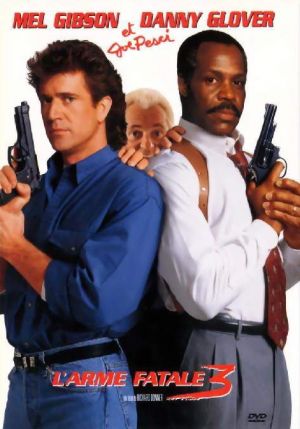
Cop Out was a certain type of movie, but not the homage to the Buddy Cop Comedy genre it purported to be. Instead, it was Generic Action Comedy With A Black Guy. It was Lethal Weapon 3 (complete with annoying lackey Sean William Scott in place of Joe Pesci's Leo Getz), not Lethal Weapon. It was Showtime with Eddie Murphy and Robert DeNiro. It was I, Spy with Eddie Murphy and Owen Wilson. It was not Hot Fuzz or Kiss Kiss Bang Bang, both recent films that showed a real appreciation for and understanding of the genre.
To be fair, there were elements in Cop Out that made it appear as though some people got it. The synthesizer-heavy score by Beverly Hills Cop's Harold Faltermeyer clearly meant to evoke memories of the era. Surprisingly, the “other” cop team of Adam Brody and Kevin Pollack fit the mold. Brody's a rookie, Pollack's a veteran. They have a weird connection over a small thing (in this case boots). They perform actual police work. They seem competent as a team, yet different enough in personalities to play off each other, and they grow to appreciate each other' value throughout the film.
Conclusion
It requires more than merely saying that one respects source material to actually prove that one respects source material. Films, series, books, and genres are more than just individual elements one can pillage from and call it a day. For sequels, it's more than just throwing in an old line here or there that the audience remembers from the first film. Homages require a greater effort than merely replicating the most basic of basics. Tron Legacy seemed to understand this; the other movies did not.


